Best Deodorant for Body Odour: 7 Confidence Picks
How We ReviewBased on UK customer review data, ingredient mechanism analysis, and peer-reviewed microbiome research. We are not paid by any brand for placement in this list.
Every "best deodorant for smelly armpits" article tells you body odour is caused by "bacteria and sweat" and leaves it there. That's technically true and almost useless — it doesn't tell you why some people smell stronger than others, or why some ingredients work better than others. There's real, specific, named science behind this, identified by university researchers working with industry, and understanding it actually changes which product makes sense for you.
⚡ Quick Verdict — Best for Body Odour UK 2026
1The Actual Science: What Causes Body Odour
Here's the part almost no competing article explains properly. Sweat itself — both eccrine and apocrine — is essentially odourless when it first reaches your skin. The smell is created entirely by bacteria feeding on it. Researchers at the University of York, working with Unilever, identified that one specific species, Staphylococcus hominis, is disproportionately responsible: it carries a specific enzyme that breaks down odourless sulfur-containing compounds in apocrine sweat into pungent chemicals called thioalcohols — specifically one named 3-methyl-3-sulfanylhexan-1-ol (3M3SH).
These compounds are detectable by the human nose at concentrations as low as one part per trillion, which is part of why body odour can feel so noticeable even from a small amount of bacterial activity. Crucially, the researchers found this ability is concentrated in only a small number of the many bacterial species living in your underarm — most of your underarm microbiome isn't actually contributing much to the smell at all.
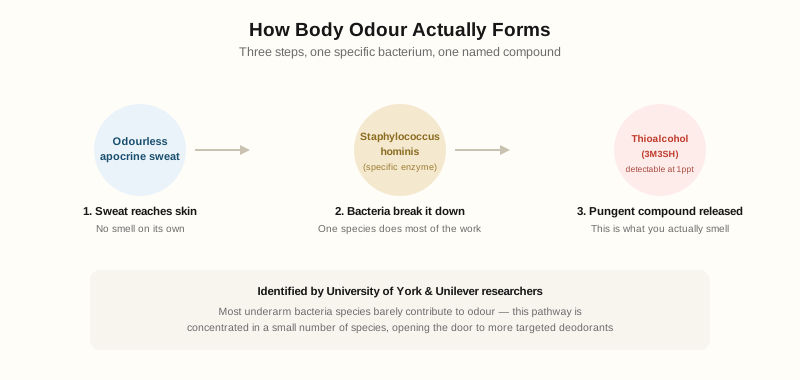
Traditional deodorants work by broadly killing or reducing bacteria across the board, or by masking odour with fragrance. Because the actual odour-producing capability is concentrated in specific species, more targeted ingredients — like the mandelic acid used in AKT London and Mando — can interrupt bacterial activity without stripping out your entire underarm microbiome indiscriminately. This is still an emerging area, not yet standard across most mainstream products.

2Odour vs Sweat: Why This Guide Isn't the Same as Our Sweating Guide
It's worth being precise about what you're actually trying to solve. If your main complaint is wetness and visible sweating, that's a different problem with a different fix — see our excessive sweating guide for the clinical antiperspirant pathway. This guide is specifically about odour: some people sweat completely normally in volume but still experience strong smell, because their specific bacterial mix happens to be a heavier thioalcohol producer. Others sweat heavily with comparatively little odour. The two problems, and the products that solve them, aren't the same thing — see our antiperspirant vs deodorant guide for the full mechanism breakdown.
3Our Top 7 Picks for Body Odour
Mitchum Maximum Strength
Combines aluminium sesquichlorohydrate (reducing the sweat bacteria feed on) with a Triple Odour Defence formula targeting bacteria and odour compounds directly, rather than relying purely on fragrance to mask smell. Already covered in our best deodorant for men guide.
Certain Dri
By substantially reducing sweat volume, Certain Dri indirectly starves odour-causing bacteria of the moisture and substrate they need to be active. Covered in depth in our guide to excessive sweating.
Secret Clinical Strength
Specifically addresses stress sweat, which comes from apocrine glands and contains more protein and fatty content than regular sweat — exactly the kind of secretion that gives odour-causing bacteria the most to work with. Covered in full in our best deodorant for women guide.
Degree UltraClear
Uses MotionSense technology to release more actively when you move, meaning stronger odour-fighting activity exactly when bacterial activity (and sweat production) is highest, rather than a flat, constant release throughout the day.
Lume Whole Body Deodorant
Built around a mandelic acid mechanism designed for use anywhere odour-causing bacteria are active, not just underarms. Covered in more depth in our best deodorant hub guide.
Mando Whole Body Deodorant
Another mandelic-acid-based whole-body option, positioned specifically around odour control rather than sweat reduction. Independent testing has noted the propylene glycol in some formulas can irritate sensitive skin, so a patch test is worth doing first — see our sensitive skin guide for the proper method.
AKT London Deodorant Balm
The mandelic acid active works antibacterially rather than through fragrance-masking or sweat-blocking, directly interrupting the bacterial activity described in Section 1. Already covered in our men's deodorant guide.
4When Body Odour Might Be Bromhidrosis
For most people, strong body odour is simply a normal — if unwelcome — result of typical bacterial activity, and a genuinely effective deodorant resolves it. Bromhidrosis is the clinical term for unusually severe, persistent body odour, and while it's not always linked to an underlying condition, sudden onset, unusually intense smell, or odour paired with other symptoms is worth raising with a GP rather than working through every deodorant on the shelf. This sits alongside, and is sometimes connected to, the primary vs secondary hyperhidrosis distinction covered in our heavy-sweating guide.
5Where to Buy in the UK
6Our Verdict
Mitchum Maximum Strength is the most reliable all-round pick — it addresses sweat and odour together, and is available everywhere. If you specifically want to work with the underlying bacterial mechanism rather than mask or broadly suppress it, AKT London's mandelic acid approach is the most interesting option currently available, though it comes at a premium price. Whichever you choose, understanding that body odour comes from a specific, identifiable bacterial process — not just vague "bacteria and sweat" — makes it much easier to judge why a product is or isn't working for you. If odour is an issue beyond the underarms, our whole body deodorant guide covers the formats designed for feet, thighs and other areas.
Dealing with sweat volume as well as odour?
Read Our Excessive Sweating Guide7Frequently Asked Questions
QWhat actually causes body odour?+
Sweat itself is odourless. Body odour is produced when bacteria on your skin — primarily a species called Staphylococcus hominis — break down odourless compounds in apocrine sweat into pungent chemicals called thioalcohols, detectable by the human nose at concentrations as low as one part per trillion. University of York and Unilever researchers identified the specific enzyme responsible for this conversion.
QWhat is the best deodorant for body odour?+
Mitchum Maximum Strength is our top pick for reliably strong odour and sweat control together. If you specifically want odour control without reducing sweat, AKT London's mandelic acid formula directly targets the odour-producing bacteria rather than just masking the smell.
QWhy does my body odour smell different to other people's?+
Individual body odour varies because everyone's underarm microbiome — the specific mix of bacteria species living there — is different, and different bacteria produce different volatile compounds. Diet, hormones, and genetics also influence the exact composition of your sweat, which affects what the bacteria have to work with.
QCan deodorant disrupt my skin's microbiome?+
Broad-spectrum antibacterial ingredients in some deodorants reduce the overall bacterial population indiscriminately, not just the odour-causing species. Newer research is exploring more targeted approaches that could inhibit the specific enzyme responsible for thioalcohol production while leaving the rest of the underarm microbiome intact, though this precision approach isn't yet standard in most mainstream products.
QIs smelly armpits a sign of a medical condition?+
Usually not — for most people it's simply a normal, if strong, result of typical underarm bacteria activity. Bromhidrosis is the clinical term for unusually severe body odour, and can sometimes indicate an underlying issue. If odour is sudden in onset, unusually strong, or accompanied by other symptoms, it's worth discussing with a GP rather than assuming it's just needing a stronger deodorant.
QDoes what I eat affect my body odour?+
Yes, to a degree. Strong-smelling foods (garlic, onions, certain spices) and their metabolic by-products can be excreted partly through sweat, which then gives underarm bacteria different compounds to work with. This is a real but generally secondary factor compared to your individual bacterial population.