Best Whole Body Deodorant: 6 Picks Beyond the Armpits
How We ReviewBased on UK customer review data, dermatologist and product-safety guidance, and ingredient analysis. This is general product information, not medical advice. We are not paid by any brand for placement in this list.
Every whole body deodorant review tells you the category exists, then lists products without ever explaining where on your body it's actually meant to go — and where it isn't. That's not a small gap: the whole point of this category is that it's formulated differently from underarm deodorant precisely because different areas of skin need different handling. We've mapped that out properly before getting to the products.
⚡ Quick Verdict — Best Whole Body Deodorant UK 2026
1Where Whole Body Deodorant Actually Goes
This is the single most useful thing this guide can tell you, and almost no competing article maps it clearly. Different areas of the body have genuinely different bacterial populations and different odour mechanisms — a product built for underarms isn't automatically right, or even tested, for everywhere else.
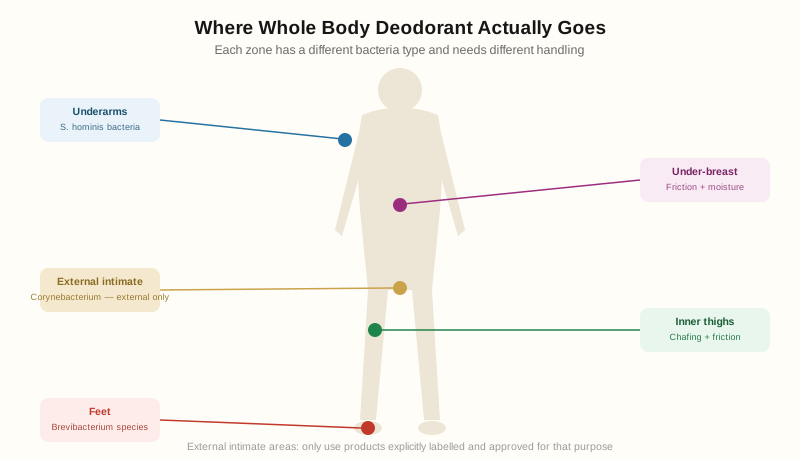
Every reputable whole body deodorant on this list is formulated for external use only. None are designed, tested, or safe for internal/vaginal use. If a product doesn't explicitly state dermatologist and gynaecologist approval for intimate-area use, don't assume it's appropriate there — stick to the areas the label actually specifies, and stop use immediately if you notice any irritation.
2Why "Whole Body" Is a Genuinely Different Formula, Not Just Marketing
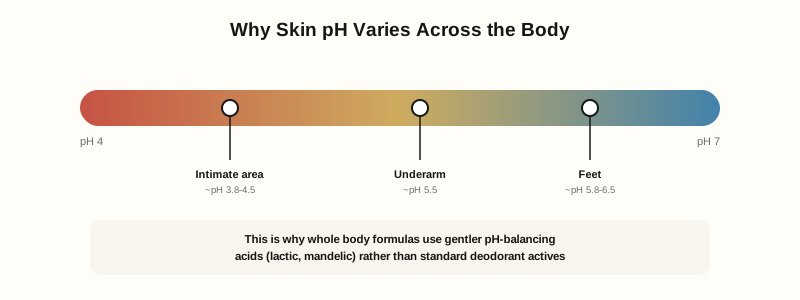
According to Unilever's own research cited at the launch of Dove's whole body range, less than 1% of the sweat your body produces actually comes from the underarms — the rest happens everywhere else, which is the entire commercial logic behind this category existing. The formulas themselves are usually built differently too: many whole body deodorants use pH-balancing acids (lactic acid in Dove's case, mandelic acid in Lume's and Mando's) rather than the antibacterial or odour-masking approach standard underarm deodorants rely on, specifically because skin pH varies significantly across different body areas and needs different handling to avoid irritation.
Feet carry a different dominant bacteria type (commonly Brevibacterium species, also notably responsible for the smell of certain washed-rind cheeses) compared to the groin area (more commonly Corynebacterium species) or the underarms (Staphylococcus hominis, covered in detail in our body odour science guide). This is the real reason a single formula can't sensibly claim to be optimal everywhere without being built and pH-balanced with that variation in mind.
3Our Top 6 Whole Body Picks
Lume Whole Body Deodorant
Founded by Dr Shannon Klingman, an OB-GYN, and the brand that effectively established this category before the major mainstream brands followed. Mandelic-acid based, with the widest range of formats and scents of any whole body brand. Already covered in our best deodorant for body odour guide.
Dove Whole Body Deo Invisible Cream
A pH-balancing formula built around 1.25% lactic acid, aluminium-free, with dermatologist and gynaecologist approval for external intimate-area use specifically. Available in Unscented and Coconut & Vanilla. Genuinely more affordable than most dedicated whole-body brands while covering the same core use cases.
Secret Whole Body Deodorant
Aluminium-free with 72-hour odour protection claims, available in both spray and cream formats depending on which application style you prefer. A recognisable mainstream name entering the category with a formula built specifically for it, not a relabelled underarm product.
Mando Whole Body Deodorant
pH-optimised specifically to interrupt odour before it develops rather than masking it after the fact. Already covered in our body odour guide, including a note on patch testing given its propylene glycol content in some formulas.
Dove Men+Care Whole Body Deo
A genuinely dedicated men's range rather than a unisex relabel — the spray uses zinc neodecanoate, the stick uses arrowroot and silica for anti-chafe use, and the cream uses corn starch specifically formulated for groin-area moisture absorption. Dermatologist-tested and aluminium-free across the range.
Degree Whole Body Deodorant
Degree's whole body range extends its MotionSense technology beyond the underarm positioning it's known for, aimed at people whose whole-body odour concerns spike specifically during exercise or high-movement days.
4Where to Buy in the UK
5Our Verdict
Lume remains the strongest overall pick simply because it's been refining this specific category the longest, with the OB-GYN-founded positioning giving it real credibility for intimate-area use. Dove Whole Body Deo is the most sensible budget entry if you want to try the category without committing to premium pricing. Whichever you choose, the map in Section 1 matters more than the brand name — use the right formula for the right area, and always respect the external-use-only guidance on intimate-area products.
Want to understand the actual chemistry behind body odour first?
Read Our Body Odour Science Guide6Frequently Asked Questions
QWhat is whole body deodorant and how is it different from regular deodorant?+
Whole body deodorant is formulated and pH-balanced for use on skin beyond the underarms — feet, under the breasts, inner thighs, and external intimate areas — where standard antiperspirants and deodorants aren't designed or tested to go. According to Unilever's own research, less than 1% of the sweat your body produces actually comes from the underarms, which is the reasoning behind the category.
QIs it safe to use whole body deodorant on intimate areas?+
Reputable whole body deodorant brands (Dove, Secret, Lume, Mando) are formulated and pH-balanced specifically for external use on intimate areas, and several carry dermatologist and gynaecologist approval for that use. All are explicitly for external use only — none are designed or safe for internal/vaginal use. Always check individual product labelling and stop use if irritation occurs.
QWhat is the best whole body deodorant overall?+
Lume is our top pick — it was the brand that established the category, has the widest product range, and is backed by an OB-GYN founder. Dove Whole Body Deo is the best budget-accessible option, using a pH-balancing lactic acid formula at a lower price point.
QCan men use whole body deodorant?+
Yes — several brands including Dove Men+Care and Mando make dedicated men's whole body ranges, formulated the same way for use on feet, groin, and other odour-prone areas beyond the underarms.
QWhy is regular deodorant not recommended for feet or intimate areas?+
Standard antiperspirant and deodorant formulas are developed and tested specifically for underarm skin, which has different pH, sensitivity, and bacterial makeup than feet or intimate skin. Using an underarm-only product elsewhere isn't necessarily dangerous, but it isn't formulated or tested for that use, which is why dedicated whole body formulas were developed.
QDo whole body deodorants contain aluminium?+
No — every major whole body deodorant brand currently on the market (Lume, Mando, Dove, Secret, Degree) is aluminium-free. They work on odour rather than reducing sweat volume, using ingredients like mandelic acid or lactic acid to manage bacteria and balance skin pH instead.