Best Deodorant for Excessive Sweating: 8 Clinical Picks
How We ReviewBased on UK NHS clinical guidance, published treatment pathways, and UK customer review data. This is general product information, not medical advice — see a GP if sweating is affecting your daily life. We are not paid by any brand for placement in this list.
Most "best deodorant for heavy sweating" articles just list stronger-smelling sticks and stop there — without ever mentioning that excessive sweating has an actual, mapped NHS treatment pathway beyond the supermarket shelf. If you've already tried every "clinical strength" stick with no real improvement, product recommendations alone are the wrong starting point. This guide covers both: the strongest genuinely effective OTC options, and where the pathway goes next if those aren't enough.
⚡ Quick Verdict — Best for Excessive Sweating UK 2026
If sweating started suddenly, happens on one side of the body only, occurs during sleep, or comes with weight loss, fever, or a racing heartbeat, see a GP before trying anything on this list — these can be signs of an underlying condition (secondary hyperhidrosis) rather than the primary type this guide covers.
1The Actual NHS Treatment Pathway
This is the part almost no other UK deodorant guide maps out, and it matters because jumping straight to Botox or surgery isn't how the system — or the evidence — actually works. There's a genuine escalation sequence, and most people who think they've "tried everything" have actually only tried the first step.
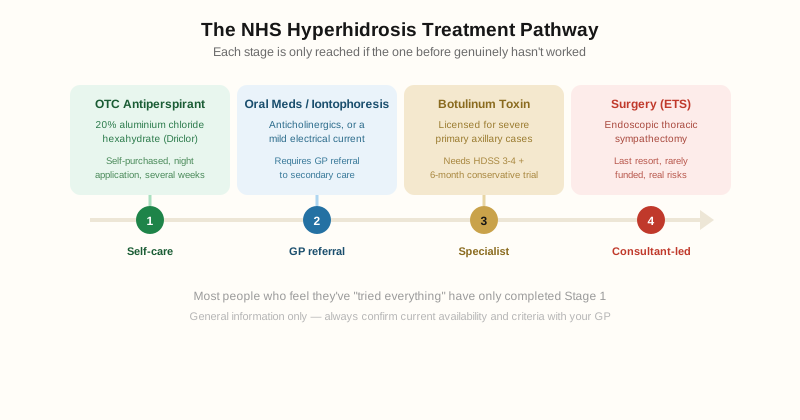
- Stage 1 — OTC strong antiperspirant: Aluminium chloride hexahydrate 20% (Driclor, Anhydrol Forte), applied at night for at least 3-5 consecutive nights, then 1-2 times weekly. NHS England guidance asks patients to purchase this themselves rather than get it prescribed.
- Stage 2 — Oral medication or iontophoresis: If Stage 1 fails after several weeks of correct use, options include oral anticholinergics (like propantheline or off-label oxybutynin) or a referral for iontophoresis — a mild electrical current passed through water that temporarily reduces sweat gland activity, most established for palms and soles but also used on underarms.
- Stage 3 — Botulinum toxin (Botox): Licensed in the UK specifically for severe primary axillary hyperhidrosis. Typically requires a documented 6-month trial of conservative treatment and a severity score of 3-4 on the Hyperhidrosis Disease Severity Scale (HDSS) before local NHS commissioning will fund it. Effects usually last 6-9 months per treatment.
- Stage 4 — Surgery: Endoscopic thoracic sympathectomy (ETS) is considered only when everything else has failed or wasn't tolerated, is governed by NICE guidance, and is not routinely funded — it also carries a real risk of compensatory sweating elsewhere on the body.
A huge number of "nothing works for my sweating" experiences come from inconsistent use of a Stage 1 product rather than a genuine treatment failure — Driclor and similar formulas need several consecutive nights of correct application (dry skin, washed off in the morning) before you can fairly judge whether they've worked.
2Understanding Hyperhidrosis: Primary vs Secondary
Primary hyperhidrosis has no identifiable underlying medical cause — it's linked to overactive cholinergic nerve stimulation of eccrine sweat glands, and often runs in families. It typically affects specific areas symmetrically: both underarms, both palms, both soles, or the face, and usually starts in childhood or adolescence. Secondary hyperhidrosis is caused by something else — a medical condition, medication side effect, menopause, or in rare cases a tumour — and tends to be more generalised across the body, can start suddenly at any age, and often includes night sweats.
This distinction matters because the products in this guide are built for primary hyperhidrosis. If your pattern looks more like the secondary description, a GP visit to identify the underlying cause is the more useful next step than trying another antiperspirant.
3Our Top 8 Picks for Excessive Sweating
Driclor
20% aluminium chloride hexahydrate — the exact concentration the NHS names as its own first-line recommendation for hyperhidrosis. Applied at night to completely dry skin and washed off in the morning; this overnight window is when it's most effective, since sweat glands are least active. Can cause irritation in some users, manageable with 1% hydrocortisone the following morning if needed.
Odaban
A UK brand built specifically around hyperhidrosis, using aluminium chloride in a fast-drying spray format. Widely available on the high street rather than needing to be ordered specially, which makes it a practical first step for many.
Certain Dri
Aluminium sesquichlorohydrate-based, positioned specifically for "excessive perspiration" rather than daily wear. A long-standing US clinical-strength brand with a solid track record among heavy sweaters who've tried standard antiperspirants first.
Carpe Antiperspirant
Built by a company founded specifically around hyperhidrosis, with separate formulas for underarms, hands, and feet rather than a one-size-fits-all stick. The lotion format allows more precise, controlled application than a spray or roll-on.
Secret Clinical Strength
A step below Driclor in concentration, but a genuinely stronger daily-wear option than standard antiperspirant for moderate excess sweating. Covered in full in our best deodorant for women guide.
Mitchum Maximum Strength
Aluminium sesquichlorohydrate at 20% — genuinely strong for the price. A sensible mid-point to try before stepping up to prescription-adjacent options like Driclor. Full detail in our best deodorant for men guide.
Perspi-Guard Maximum Strength
The strongest OTC antiperspirant available without a prescription in the UK, using a high-concentration aluminium chloride formula applied overnight like Driclor. Already covered in our men's deodorant guide.
SweatBlock Towelettes
Single-use antiperspirant wipes at a clinical concentration, useful for anyone who doesn't want a full bottle for occasional high-stakes days (interviews, weddings, travel) or who finds a wipe easier to apply evenly than a roll-on. Wipes also sidestep hand-luggage liquid limits entirely — see our guide to taking deodorant on a plane for the current UK airport rules.
4How to Apply Clinical-Strength Antiperspirant Correctly
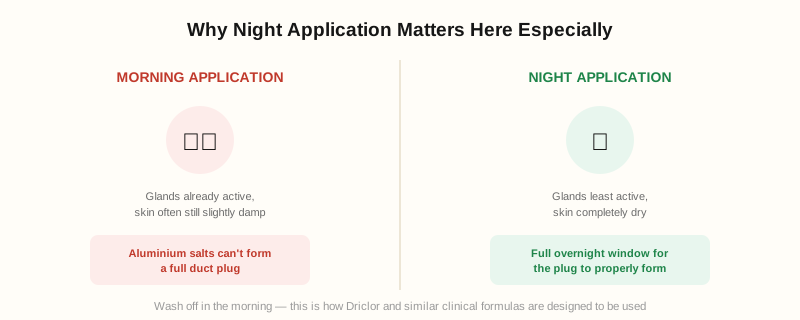
- Apply at night to completely dry skin — this is when it works best, not after a morning shower
- Wash off in the morning rather than leaving it on all day
- Start with 3-5 consecutive nights, then reduce to 1-2 times weekly for maintenance once it's working
- Manage irritation with a fragrance-free moisturiser or, if needed, 1% hydrocortisone cream the following morning
- Give it several weeks before judging whether it's genuinely not working — inconsistent early use is the most common reason people think Stage 1 has failed
5Where to Buy in the UK
6Our Verdict
Driclor is the honest starting point for genuine excessive sweating — it's what the NHS itself recommends first, and most people haven't given it a proper multi-night trial before writing it off. If you've done that correctly and it's still not enough, the next move isn't a different product — it's a GP conversation about oral medication, iontophoresis, or Botox, depending on severity. No deodorant or antiperspirant on a shelf replaces that conversation once you're genuinely past what topical treatment can do.
Want to understand exactly how antiperspirant works before choosing one?
Read Our Antiperspirant vs Deodorant Guide7Frequently Asked Questions
QWhat is the strongest deodorant for excessive sweating?+
Driclor and Anhydrol Forte, both containing 20% aluminium chloride hexahydrate, are the strongest over-the-counter options and the NHS's own first-line recommendation for hyperhidrosis. They're applied at night to dry skin and washed off in the morning, rather than used like a standard daily antiperspirant.
QWhat is hyperhidrosis and how is it different from normal sweating?+
Hyperhidrosis is a medical condition involving sweating far beyond what's needed for temperature regulation, often disrupting daily life. Primary hyperhidrosis has no identifiable medical cause and typically affects the underarms, palms, soles or face; secondary hyperhidrosis is caused by an underlying condition or medication. If sweating is sudden in onset, one-sided, or accompanied by other symptoms, see a GP to rule out a secondary cause.
QWhat does the NHS actually offer for excessive sweating?+
The pathway typically starts with an over-the-counter strong antiperspirant (aluminium chloride hexahydrate 20%), which patients are usually asked to purchase themselves per NHS England's OTC guidance. If that fails after several weeks, next steps include oral anticholinergic medication or a referral for iontophoresis. Botulinum toxin injections are available for severe, treatment-resistant cases meeting specific severity criteria. Surgery is a last resort and not routinely funded.
QDoes Botox for sweating actually work and is it available on the NHS?+
Yes, botulinum toxin is licensed in the UK specifically for severe primary axillary hyperhidrosis and works by temporarily blocking the nerve signals that trigger sweat glands, typically lasting 6-9 months per treatment. NHS availability depends on meeting local commissioning criteria — usually a severity score of 3 or 4 on the Hyperhidrosis Disease Severity Scale and a documented 6-month trial of conservative treatment first.
QWhat is iontophoresis and does it hurt?+
Iontophoresis passes a mild electrical current through water or a wet pad in contact with the skin, temporarily reducing sweat gland activity. It's most established for palms and soles, and can also be used on underarms. Most people feel a tingling sensation rather than pain, though it can cause temporary skin irritation. A course of sessions is usually needed before switching to a home maintenance device.
QIs Driclor the same as normal antiperspirant?+
No. Driclor uses a much higher aluminium chloride hexahydrate concentration (20%) than standard daily antiperspirants (typically 10-15% aluminium chlorohydrate) and is applied differently — at night to completely dry skin, washed off in the morning, rather than applied daily after showering.