Best Antiperspirant Deodorant: 8 That Beat Heavy Sweating
How We ReviewBased on UK customer review data, published ingredient concentrations, and FDA OTC monograph classification data. We are not paid by any brand for placement in this list.
Almost every "best antiperspirant deodorant" guide ranks products by brand reputation and scent, then mentions "clinical strength" without ever explaining what that actually means in percentage terms. The aluminium concentration is the single biggest factor in how well a product actually controls sweat, and it varies more between products than most people realise. We've put the real numbers side by side instead of just repeating marketing language.
⚡ Quick Verdict — Best Antiperspirant Deodorant UK 2026
1The Concentration Table Most Guides Skip
Every antiperspirant deodorant lists its active ingredient by law, but almost no buying guide actually puts the percentages next to each other. Higher concentration generally means a more extensive protein plug forms in the sweat duct, which means less sweat gets through — but it also means a higher chance of irritation, so this isn't simply "buy the highest number."
| Product | Active Compound | Typical Concentration | Tier |
|---|---|---|---|
| Old Spice Swagger | Aluminium zirconium tetrachlorohydrex gly | ~11-15% | Standard |
| Dove Men+Care | Aluminium chlorohydrate | ~11-15% | Standard |
| Degree UltraClear | Aluminium zirconium tetrachlorohydrex gly | ~15% | Standard |
| Certain Dri (Regular) | Aluminium sesquichlorohydrate | ~12% | Standard |
| Sure Maximum Protection | Aluminium zirconium | ~19-20% | Clinical |
| Secret Clinical Strength | Aluminium zirconium tetrachlorohydrex gly | ~20% | Clinical |
| Mitchum Maximum Strength | Aluminium sesquichlorohydrate | ~20% | Clinical |
| Driclor | Aluminium chloride hexahydrate | ~20% (night application) | Prescription-Adjacent |
Concentrations are typical published ranges and can vary slightly by batch, region, or product line refresh — always check the individual product's label for the exact current figure.
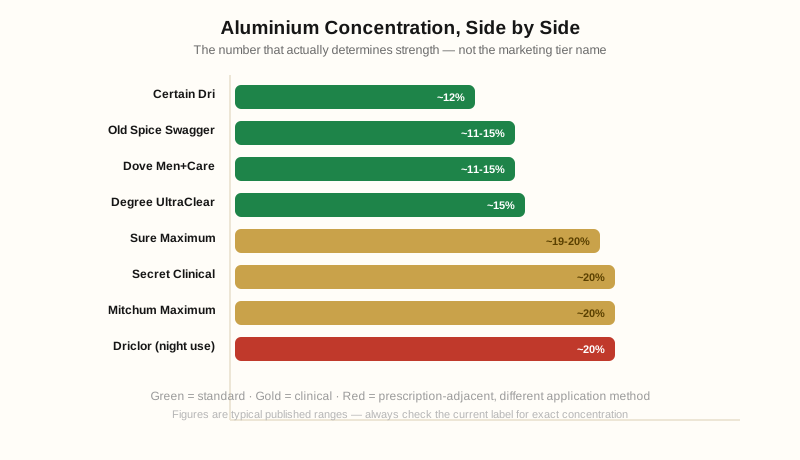
Aluminium chlorohydrate, aluminium zirconium tetrachlorohydrex gly, and aluminium sesquichlorohydrate all work through the same basic duct-plugging mechanism. None is definitively "stronger" than another at equivalent concentrations — the percentage and correct application matter far more than which specific compound a product uses. We've covered the full mechanism in our antiperspirant vs deodorant guide.
2Do 24hr, 48hr and 72hr Claims Actually Hold Up?
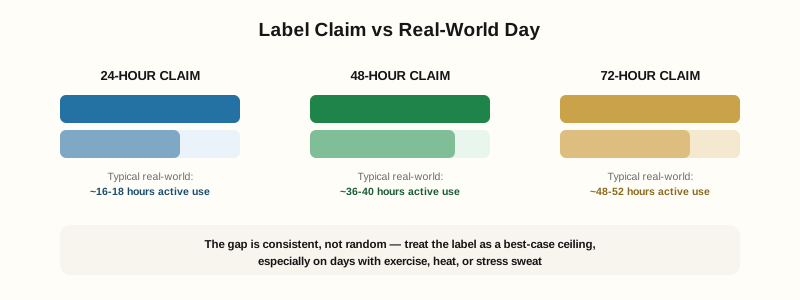
These numbers come from controlled testing conditions, and real-world results are typically shorter than the claim, particularly with exercise, heat, or stress sweat involved — all of which increase sweat production beyond what a lab protocol simulates. Treat the labelled duration as a best-case ceiling rather than a guarantee. In practice, most users find a genuine 48-hour product performs reliably for a normal working day, while a 24-hour product may need reapplication if the day includes heavy activity.
- Apply at night for the longest-lasting protection — sweat glands are least active then, giving the aluminium compound time to form a complete plug before the day starts
- Don't judge a product on one bad day — heat, stress, and activity level all affect real-world performance more than the label duration does
- A higher concentration compensates for high-activity days — if you're consistently disappointed by a standard-strength product, the fix is usually concentration, not brand
3Our Top 8 Antiperspirant Deodorant Picks
Secret Clinical Strength
Around 20% aluminium zirconium tetrachlorohydrex gly, addressing both regular and stress-triggered sweat. Already covered in depth in our best deodorant for women guide.
Mitchum Maximum Strength
Around 20% aluminium sesquichlorohydrate — genuinely clinical concentration at a mainstream price point. Available in an unscented variant. Already covered in our best deodorant for men guide.
Sure Maximum Protection
Around 19-20% aluminium zirconium, putting it roughly on par with dedicated clinical-strength lines despite Sure's mainstream positioning. The cream-to-powder format avoids fabric transfer. Already covered in our men's deodorant guide.
Certain Dri
The standard formula sits around 12% — a genuine step up from most supermarket antiperspirants without moving to clinical-strength daily wear. Certain Dri's range also includes higher-concentration options for those who need more. Already covered in our excessive sweating guide.
Old Spice Swagger
Standard concentration (roughly 11-15%), but one of the best-regarded scents in this list — lime and cedarwood that layers well under cologne. Already covered in our our full men's roundup.
Dove Men+Care Antiperspirant
Standard concentration (roughly 11-15% aluminium chlorohydrate), but the ¼ moisturising cream base makes it one of the gentler standard-strength options for skin that reacts to higher concentrations. Already covered in our best picks for men.
Degree UltraClear
Standard concentration (roughly 15%), specifically formulated to minimise both white marks on dark fabric and yellow staining on light fabric. Already covered in our body odour guide.
Driclor
20% aluminium chloride hexahydrate, applied at night rather than as a standard daily antiperspirant — the NHS's own first-line recommendation for genuinely excessive sweating. Full detail, including the correct application protocol, in our guide to excessive sweating.
4Where to Buy in the UK
5Our Verdict
Secret Clinical Strength is the most reliable overall pick — genuinely clinical concentration, widely available, and available in scents that don't feel like an afterthought. Mitchum Maximum Strength gets you the same concentration tier for less money if brand recognition matters less to you than the number on the label. The real lesson from the concentration table above is this: if a "clinical strength" product hasn't worked better than your old standard one, check whether it's actually a meaningfully higher percentage — some "clinical" branding sits closer to standard concentration than the name suggests.
Dealing with sweating beyond what any daily antiperspirant handles?
Read Our Excessive Sweating Guide6Frequently Asked Questions
QWhat is the strongest over-the-counter antiperspirant deodorant?+
Among mainstream combined antiperspirant-deodorant products, Mitchum Maximum Strength and Secret Clinical Strength use the highest aluminium concentrations, typically around 20%. For genuine clinical-strength options above that, Driclor (20% aluminium chloride hexahydrate) is applied differently — at night rather than as a daily antiperspirant — and covered in our dedicated excessive sweating guide.
QDoes a higher aluminium percentage always mean better sweat protection?+
Generally yes, up to a point — higher concentrations of aluminium salts form more extensive protein plugs in the sweat ducts, reducing sweat volume more effectively. But higher concentration also increases the chance of skin irritation, so it's a genuine trade-off rather than a straightforward "more is better" choice, and correct application (applying to dry skin, ideally at night) matters as much as concentration for many users.
QAre 48-hour and 72-hour antiperspirant claims realistic?+
These claims are typically tested under controlled laboratory conditions with limited physical activity, not a full day of normal life. Most users report that real-world protection runs somewhat shorter than the claimed duration, particularly with exercise, heat, or stress sweat involved. Treat the number on the label as a best-case ceiling rather than a guarantee.
QWhat's the difference between aluminium chlorohydrate and aluminium zirconium?+
Both are common antiperspirant actives that work by the same basic mechanism — forming a temporary gel plug in the sweat duct. Aluminium zirconium tetrachlorohydrex gly is generally used at similar or slightly lower concentrations than aluminium chlorohydrate for comparable effect, and is often blended with glycine specifically to reduce irritation. Neither is definitively "stronger" — concentration and formulation matter more than which specific compound is used.
QIs antiperspirant deodorant safe to use every day?+
For most people, yes. Regulatory bodies including the FDA and EU cosmetics regulators permit daily use at the concentrations found in over-the-counter products. If you experience ongoing irritation, switching to a lower concentration or a different compound (aluminium zirconium rather than chlorohydrate, for example) often resolves it.
QWhat is the best unscented antiperspirant deodorant?+
Mitchum Maximum Strength offers a genuinely unscented variant at clinical-grade concentration, which is useful if you want to layer your own fragrance separately or have a fragrance sensitivity. Dove Men+Care Sensitive is a gentler unscented option, though at a standard rather than clinical concentration.