Best Aluminum-Free Deodorant: 8 That Actually Stop Odour
How We ReviewBased on independent test data (including Consumer Reports' recent panel testing), UK customer review data, and ingredient efficacy analysis. We lead with performance, not ingredient storytelling. We do not accept payment from brands for placement in this list.
Most "best aluminium-free deodorant" articles are really just ingredient storytelling — plant-based this, mineral-powered that — without ever addressing the actual question: does it stop you smelling? We led with performance data instead, including real independent panel-test findings, and ranked accordingly. Some well-marketed brands don't come out looking as strong as their packaging suggests, and we've said so.
⚡ Quick Verdict — Best Aluminum-Free Deodorant UK 2026
None of the products in this guide reduce how much you sweat — that specifically requires an aluminium-based active ingredient. Aluminium-free deodorant targets odour only. If wetness rather than smell is your main concern, see our antiperspirant vs deodorant guide for the full distinction.
1Does Aluminium-Free Deodorant Actually Work?
Yes — but it's worth understanding exactly what "work" means here. Aluminium-free deodorant doesn't touch your eccrine sweat glands at all. It works entirely on the surface, targeting the apocrine gland secretions and the bacteria that break them down into odour. Done well, this genuinely controls smell all day. Done poorly — usually through an under-dosed active or a formula that breaks down under heat — it fades by early afternoon, which is where most negative reviews for this category come from.
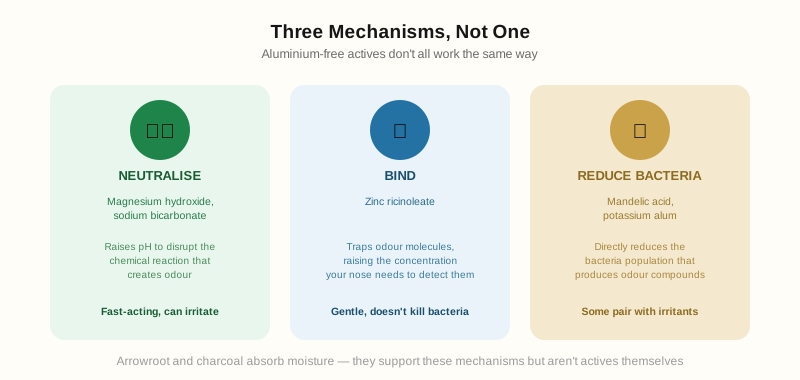
The active ingredient matters more than the marketing language around it. Here's what's actually doing the work in the formulas covered in this guide:
Neutralises the acidic by-products bacteria produce, raising skin pH just enough to disrupt odour formation without irritating most skin types.
Highly effective at neutralising odour, but its alkaline pH is the most common cause of aluminium-free deodorant rash in reactive skin.
Physically binds to odour molecules and raises the concentration your nose needs to detect them — it doesn't kill bacteria, it makes their by-products harder to smell.
Used in Lume and Mando; works by reducing the bacteria population directly. Some formulas pair it with propylene glycol, which can irritate reactive skin.
These absorb surface moisture so formulas glide on drier, but neither one neutralises odour on its own — they support the active ingredient rather than replacing it.
A naturally occurring mineral that inhibits odour-causing bacteria without blocking pores — the active behind crystal-style deodorants.
2Our Top 8 Aluminum-Free Picks for 2026
Salt & Stone Aluminum-Free Deodorant
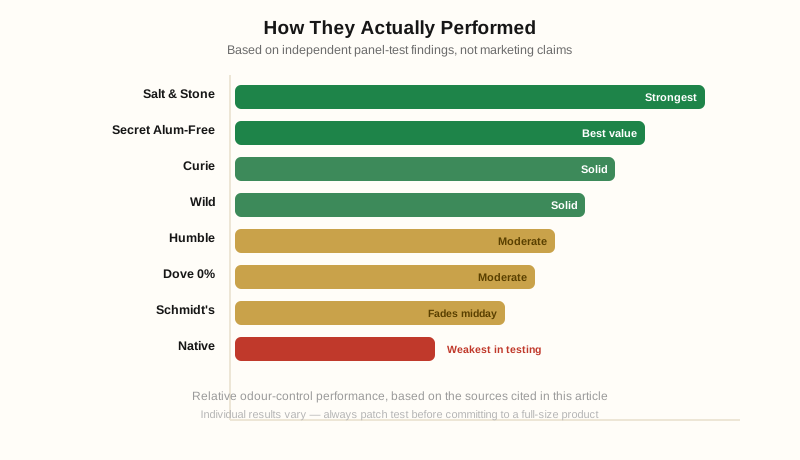
This is the standout performer in recent independent panel testing, rated nearly as highly as premium balm formats costing significantly more. Testers reported reliable odour control through weightlifting sessions and full days outdoors in warm weather — genuinely strong results for a stick format. The Black Rose & Oud scent was specifically praised as one of the best fragrances tested in its category.
Secret Aluminum Free
The most affordable strong performer in independent testing — competent at blocking odour across most of the day, across multiple scent options including Rose and Cotton. It won't outperform premium picks like Salt & Stone, but it's a genuinely reasonable everyday option at a fraction of the price.
Native Deodorant
Native uses baking soda and magnesium hydroxide to neutralise odour, with tapioca starch for dryness, and has a large, genuinely enthusiastic customer base. In fairness, though, recent independent panel testing rated it the weakest performer in its comparison group, citing a clumpy, gritty texture that can leave residue on the applicator and, in one case, white marks on dark clothing (our guide to deodorant marks on black shirts covers how to shift those). Individual results clearly vary more with this one than most — worth a patch test before committing to a multipack.
Dove 0% Aluminium Deodorant
Dove's conditioning glycerin base makes this one of the gentlest options on this list, and it's available at every major UK retailer for a genuinely low price. It doesn't top independent efficacy tests the way pricier picks do, but for casual, low-intensity daily wear it's a sound, low-risk starting point.
Wild Refillable Deodorant
Magnesium hydroxide formula, Which? Best Buy verified, with a refillable case system that cuts packaging waste substantially. We've covered Wild in full, including its full ingredient and performance breakdown, in our best natural deodorant guide.
Schmidt's Charcoal & Magnesium
A well-formulated glide-on formula using magnesium hydroxide and baking soda together, with arrowroot for dryness. Independent user testing found it effective on lower-intensity days but noted it can lose potency by midday during intense activity — a genuine limitation worth knowing before you buy, not a dealbreaker for everyday wear.
Humble Brands Deodorant
A short-ingredient-list formula built around magnesium hydroxide and arrowroot, without the longer fragrance blends some competitors use. Straightforward rather than flashy, and a reasonable choice if you specifically want to minimise the number of ingredients you're applying daily.
Curie Deodorant
Magnesium hydroxide with a jojoba and coconut oil base, EWG Skin Deep verified, and consistently well-reviewed for actual odour control rather than just clean-ingredient marketing. We've covered Curie in more depth in our best deodorant for women guide.
3Understanding EWG Ratings on Aluminium-Free Deodorant
Many aluminium-free brands lead their marketing with an EWG Skin Deep score, and it's worth knowing what that number does and doesn't tell you. EWG's rating reflects data availability and a precautionary scoring approach — a low score often means well-documented, low-concern ingredients, but a higher score doesn't automatically mean a product is unsafe, just that less safety data exists or a precautionary flag was applied to one ingredient. It's a useful reference point, not a performance metric — a product can score very well on EWG and still underperform on actual odour control, and vice versa. Cross-reference EWG scores against real performance data rather than treating them as the whole picture.
- Check the active ingredient, not just the "natural" or "clean" label — magnesium hydroxide and zinc ricinoleate are the more reliably effective actives
- Expect an adjustment period if switching from antiperspirant — see our natural deodorant transition guide for the realistic 1-3 week timeline
- Cream and balm formats often use higher active concentrations than sticks, which can mean stronger odour control at the cost of a less convenient application
- Patch test new formulas, particularly baking-soda-based ones, before committing to daily use
- Reapply after heavy sweating — even the best-performing aluminium-free formulas work by managing bacteria, not blocking sweat, so activity can wash away the protective layer
4Where to Buy in the UK
5Our Verdict
The honest takeaway from testing this category on performance rather than marketing: Salt & Stone is the strongest aluminium-free deodorant currently available if you're willing to pay a premium for verified results, while Secret Aluminum Free delivers most of that reliability at a fraction of the cost. Native's popularity doesn't fully match its independent test performance, so go in with realistic expectations if you choose it. Whichever you pick, remember that "aluminium-free" solves odour, not sweat — for the sweat question, you're looking at a different product entirely.
Not sure if you need aluminium-free or a proper antiperspirant?
Read Our Antiperspirant vs Deodorant Guide6Frequently Asked Questions
QDoes aluminum-free deodorant actually work?+
Yes, for odour control specifically — independent testing has found several aluminium-free formulas deliver genuinely reliable all-day odour protection. What it won't do is reduce how much you sweat, since that requires an aluminium-based antiperspirant active. Expect a 1-3 week adjustment period if you're switching from antiperspirant.
QWhat is the best aluminum-free deodorant overall?+
Salt & Stone's Aluminum-Free Deodorant performed strongest in recent independent testing, with testers reporting reliable odour control through intense workouts and long days. Secret Aluminum Free is the best budget-friendly option that still performs competently across most of the day.
QWhat ingredients actually control odour in aluminum-free deodorant?+
The main actives are magnesium hydroxide and sodium bicarbonate, which neutralise the acidic by-products of odour-causing bacteria; zinc ricinoleate, which binds to odour molecules and raises your nose's detection threshold for them; and mandelic acid, which works antibacterially. Arrowroot and charcoal are moisture absorbers rather than odour-control actives in their own right.
QIs aluminum-free deodorant the same as natural deodorant?+
Not necessarily. "Aluminium-free" specifically means no aluminium salts are present. "Natural" is a broader, legally undefined marketing term that may or may not overlap with aluminium-free. Always check the ingredient list rather than relying on either label alone.
QIs Dove aluminum-free deodorant good?+
Dove 0% Aluminium is a solid, accessible entry point — widely available, inexpensive, and using a conditioning glycerin base. It doesn't top independent efficacy rankings the way pricier options like Salt & Stone do, but it's a reasonable low-cost way to trial aluminium-free deodorant.
QWhy does my aluminum-free deodorant stop working by midday?+
This is a common, genuine limitation of some formulas rather than user error — several aluminium-free sticks have been found in independent testing to lose effectiveness several hours into an active day. If this happens consistently, a cream or paste format (which typically uses a higher active concentration) or a different ingredient base, such as mandelic acid instead of baking soda, may perform better for you.